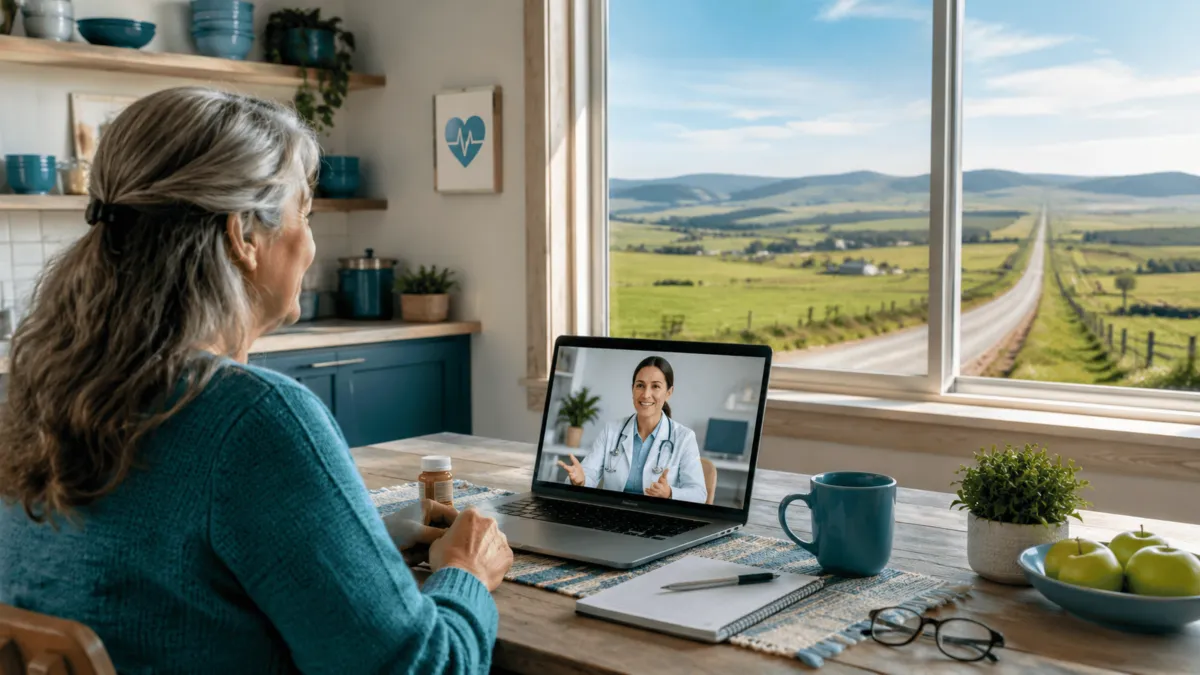
Living Far From a Doctor? What Virtual Care Can and Cannot Do | WellCare 360
Living far from a clinic changes the meaning of a “quick” medical visit. A concern that might take an hour to address in a city can require a long drive, time away from work, child care arrangements, or waiting until transportation is available. For someone in a rural or underserved area, figuring out whether an in-person visit is necessary can be part of the problem.
Virtual care can provide clinical guidance before a patient commits to that trip. Depending on the concern, a virtual visit may lead to treatment, follow-up care, medication support, or a recommendation for an in-person examination or testing. Understanding those boundaries helps patients know where virtual care in rural areas fits and when another level of care may be needed.
What Virtual Care Can Handle From Home
Federal telehealth guidance identifies services that may be delivered virtually. These include care for common illnesses, headaches, infections and skin concerns, medication management, post-surgery follow-up, mental and behavioral health care, review of laboratory or imaging results, and remote patient monitoring. (Source: U.S. Department of Health and Human Services)
That range can make a practical difference when the nearest clinic is far away. A parent whose child develops a rash in the evening may be able to discuss it with a clinician before deciding whether a trip is needed. Someone receiving mental health care may be able to attend a session from home. Remote patient monitoring tools can also help clinicians track health outside a traditional office visit.
WellCare 360’s platform facilitates access to virtual healthcare services that include tele urgent care, tele mental health, and prescription care. Its site describes symptom reviews with licensed clinicians, treatment planning, prescription support, and follow-up care. WellCare 360 facilitates access to licensed healthcare providers and does not itself provide medical advice or make diagnosis and treatment decisions.
Medical decisions during the visit remain with the licensed healthcare professional providing the care.
Where a Virtual Visit May Need to Become an In-Person Visit
A screen does not automatically prevent a clinician from examining a patient. HHS guidance explains that parts of a physical exam can be performed virtually through visual observation, conversation, patient-guided movements, and home equipment when appropriate. It also acknowledges that certain exam elements may not be possible when the necessary equipment or information is unavailable. (Source: U.S. Department of Health and Human Services)
In some cases, the virtual examination provides enough information for the clinician to address the concern remotely. In another case, the clinician may recommend an office visit, laboratory work, imaging, or another hands-on evaluation. If that happens, the virtual visit can still help clarify what type of care should come next.
Medication management may also be part of a telehealth visit. HHS lists managing medicines among common telehealth uses, while the clinician determines what treatment is appropriate for the patient.
Routine virtual care should not be relied on during a medical emergency. WellCare 360 states that its virtual healthcare services do not replace emergency medical care and directs users experiencing an emergency to contact local emergency services.
Rural Access Still Depends on Technology and Location
Distance from a doctor is only one potential barrier. Reliable internet access can determine whether a video visit works at all.
HHS says broadband is preferred for video-based telehealth but remains unavailable in some rural and remote areas. Depending on the provider and type of care, alternatives can include phone calls, secure patient-portal messages, text messaging, asynchronous exchanges of information, or connecting from a local clinic. (Source: U.S. Department of Health and Human Services)
The patient’s physical location can matter too. Telehealth licensing requirements vary by state, and healthcare professionals generally need to be licensed or otherwise legally permitted to provide care where the patient is located. (Source: U.S. Department of Health and Human Services)
For rural patients near state borders or those who travel regularly, their location at the time of the appointment may affect which clinicians can legally treat them.
Using Virtual Care to Decide What Comes Next
For someone facing a long drive to medical care, a virtual visit may provide useful direction before transportation, time off, or other arrangements have to be made. The clinician may be able to address the concern remotely, continue an existing care plan, help with medication management, or determine that local testing or an in-person examination is appropriate.
When the concern can be handled remotely, the trip may not be necessary. When testing or hands-on care is needed, the patient leaves the visit knowing what kind of care to seek next.
WellCare 360 helps connect users with independent providers and partner services offering virtual urgent care, mental health support, prescription care, and related digital health services.
Explore virtual care with WellCare 360.
